Why Spring Is the Perfect Time to Address Lingering Winter Pain
As winter fades and spring approaches, many people expect aches and stiffness to disappear on their own. But for a large number of patients, winter pain doesn’t magically resolve — it lingers.
At Dr. Harman Braich, Chiropractor, operating out of Creekwood Physiotherapy, early spring is one of the busiest times of year for patients dealing with unresolved neck pain, low back pain, shoulder stiffness, and hip tightness that built up over the winter months.
This blog explains why winter pain often persists into spring, what research suggests about inactivity and tissue health, and why spring may be an ideal time to address musculoskeletal issues before they become chronic.
Why Pain Often Builds Up Over Winter
Winter creates a perfect environment for musculoskeletal irritation to accumulate slowly.
Ready for Relief?
Book Your AppointmentCommon winter factors include:
- Reduced daily movement
- Prolonged sitting
- Cold-related muscle guarding
- Less outdoor activity
- Increased stress
- Disrupted sleep
- Repetitive shovelling and awkward lifting
Research suggests that reduced physical activity and prolonged static postures may contribute to joint stiffness, muscle tightness, and reduced tissue tolerance over time (Booth et al., 2017).
Unlike acute injuries, these changes often develop gradually — which is why many people don’t seek care until spring.
Why Lingering Pain Doesn’t Just “Go Away”
A common misconception is that pain caused by inactivity will resolve once you “start moving again.” While movement is important, it doesn’t automatically undo months of compensation or stiffness.
Research in musculoskeletal rehabilitation suggests that:
- Prolonged inactivity may reduce tissue capacity
- Joint stiffness may persist without targeted intervention
- Pain sensitivity may remain elevated even after activity resumes
(Booth et al., 2017; Hodges & Smeets, 2015)
Have Questions?
We're Here to Help!This helps explain why people often feel worse when they jump back into activity too quickly in the spring.
Common Springtime Complaints Linked to Winter Deconditioning
At Dr. Harman Braich, Chiropractor, we frequently see:
Low Back Pain
Often related to prolonged sitting, reduced hip mobility, and weak trunk endurance.
Neck and Upper Back Stiffness
Associated with desk work, screen time, and cold-weather muscle guarding.
Shoulder Pain
Common in people returning to gym training, yard work, or recreational sports.
Hip and Knee Pain
Often related to deconditioning combined with sudden increases in walking or running.
Looking to Get Started?
Book Online Today!Recurring “Tweaks”
Minor movements causing disproportionate pain — a sign of reduced tissue tolerance.
What Research Suggests About Deconditioning and Pain
Research suggests that musculoskeletal tissues adapt to the loads placed on them. When load is reduced for prolonged periods, tissues may become less tolerant to stress (Booth et al., 2017).
Pain science research also suggests that:
- Reduced movement variability may increase sensitivity
- Fear of movement may persist after winter inactivity
- Gradual exposure to movement is often more effective than sudden spikes
(Hodges & Smeets, 2015)
This supports the idea that spring is not the time to “push through pain,” but rather to rebuild capacity intentionally.
Why Spring Is an Ideal Time to Address Pain
Spring represents a transition period:
- Activity levels naturally increase
- Weather improves
- Motivation rises
- Routines reset
Addressing pain now may help:
- Reduce flare-ups as activity increases
- Improve tolerance to exercise
- Prevent acute injuries
- Restore confidence in movement
Waiting until pain becomes severe often makes recovery more complex.
How Chiropractic Care May Help Reset Movement After Winter
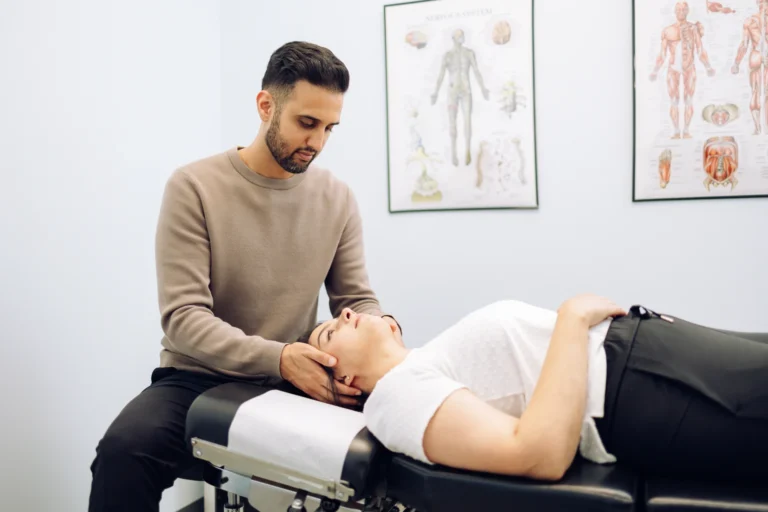
At Dr. Harman Braich, Chiropractor, spring care focuses on restoring movement quality, not just reducing symptoms.
Start Your Journey!
Book With Us Today1. Restoring Joint Mobility Restricted Over Winter
Prolonged sitting and reduced movement often lead to joint stiffness in the spine, hips, and shoulders.
Chiropractic adjustments may help restore joint motion
Improved mobility may reduce compensatory strain as activity increases.
2. Reducing Muscle Guarding and Tension
Cold-weather muscle guarding may persist even after temperatures rise.
Soft-tissue therapy may help:
- Reduce tone
- Improve circulation
- Restore movement confidence
This can be especially important before returning to exercise.
3. Reintroducing Movement Safely
Rather than jumping back into full activity, a graded approach is often more effective.
Through Rehabilitation & Exercise Therapy patients may receive:
- Mobility drills
- Load-tolerance exercises
- Strength reintroduction
- Movement pattern correction
This aligns with rehabilitation research emphasizing gradual exposure (Hodges & Smeets, 2015).
4. Addressing Chronic Winter Stressors
For patients with lingering symptoms, adjunct therapies may help support recovery:
- Shockwave Therapy for persistent soft-tissue pain
- Spinal Decompression Therapy for chronic low back discomfort
- Dry Needling & Acupuncture for muscle tension
- Custom Foot Orthotics when gait changes contribute to symptoms
Why an Athletic Perspective Matters in Seasonal Transitions
As a former elite soccer player and captain of the University of Alberta Golden Bears, Dr. Braich understands seasonal transitions well.
Athletes don’t jump from off-season inactivity into full competition — they rebuild capacity progressively. The same principle applies to everyday movement.
Practical Spring Reset Tips
- Increase activity gradually
- Walk daily before returning to higher-impact exercise
- Prioritize mobility before intensity
- Address pain early
- Don’t ignore recurring stiffness
- Seek assessment if pain persists beyond 2–3 weeks
Localized Care for Southwest Edmonton Residents
At Dr. Harman Braich, Chiropractor, operating out of Creekwood Physiotherapy, we proudly serve:
- Creekwood Chappelle & Chappelle Gardens
- Ambleside, Keswick & Windermere
- Glenridding Heights & Glenridding Ravine
- Heritage Valley, Paisley, Desrochers & Jagare Ridge
- Rutherford, Callaghan, Allard, Cavanagh & Blackmud Creek
- Richford, Macewan & Blackburne
Spring Is the Right Time to Act
Lingering winter pain doesn’t have to define your spring. Addressing movement restrictions and rebuilding capacity now may help you move better, exercise with confidence, and prevent injuries as activity levels rise.
Visit braichchiro.com to book an appointment with Dr. Harman Braich, Chiropractor.
Research & References
- Booth FW, Roberts CK, Laye MJ. Lack of exercise is a major cause of chronic diseases. Comprehensive Physiology. 2017.
Hodges PW, Smeets RJ. Interaction between pain, movement, and physical activity. Journal of Orthopaedic & Sports Physical Therapy. 2015.