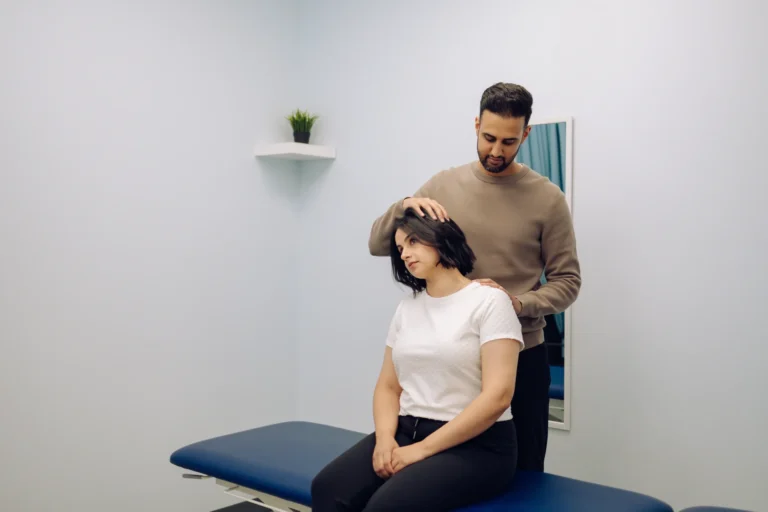
Why Pain Keeps Coming Back — And How a Movement-Based Approach May Help
One of the most frustrating experiences for patients is this:
the pain improves… and then it comes back.
You rest, stretch, get treatment, feel better for a few weeks — and then the same symptoms return with work, exercise, or daily life.
At Dr. Harman Braich, Chiropractor, operating out of Creekwood Physiotherapy, recurring pain is one of the most common reasons patients seek a second opinion.
Ready for Relief?
Book Your AppointmentThis blog explores why pain often becomes recurrent, what research suggests about pain and movement, and how a movement-based chiropractic approach may help reduce flare-ups and support long-term resilience.
Why Pain Relief Doesn’t Always Mean the Problem Is Resolved
Pain is a signal — not a full diagnosis.
Modern pain science suggests that pain can decrease even when underlying movement issues, load intolerance, or coordination deficits remain (Hodges & Smeets, 2015).
This explains why:
- Symptoms improve temporarily
- Activity resumes
- Pain returns under similar stress
Relief alone doesn’t always equal readiness.
Have Questions?
We're Here to Help!Common Reasons Pain Keeps Returning
1. Movement Patterns Haven’t Changed
If daily movement patterns remain the same, tissues are often exposed to the same stresses that caused pain in the first place.
Research suggests that repeated exposure to poorly tolerated movement or load may contribute to persistent or recurrent symptoms (Van Dillen et al., 2008).
2. Tissue Capacity Was Never Rebuilt
Pain reduction does not automatically restore strength, endurance, or load tolerance.
Rehabilitation research suggests that tissues need progressive loading to adapt — not just rest (Booth et al., 2017).
Without rebuilding capacity, even normal activities may exceed tolerance.
3. The Nervous System Remains Sensitive
Pain can alter how the nervous system processes movement and threat.
Research suggests that individuals with persistent pain may demonstrate:
- Altered motor control
- Protective movement strategies
- Heightened sensitivity to load or fatigue
(Hodges & Smeets, 2015)
Without addressing this, pain may recur even in the absence of new injury.
4. Care Focused Only on Symptoms
Passive care can be valuable, but symptom-focused treatment alone may not address why pain developed.
Looking to Get Started?
Book Online Today!Evidence-informed models increasingly emphasize function, movement, and load management, not just symptom relief.
What Research Suggests About Long-Term Pain Management
Current musculoskeletal research suggests that long-term outcomes improve when care addresses:
- Movement quality
- Load tolerance
- Motor control
- Strength and endurance
- Confidence in movement
(Bertelsen et al., 2017; Hayden et al., 2005)
This doesn’t mean pain is “all in your head” — it means pain is influenced by how the body moves and adapts over time.
How a Movement-Based Chiropractic Approach Differs
At Dr. Harman Braich, Chiropractor, care is designed around why pain keeps returning, not just how to reduce it temporarily.
1. Identifying Movement Drivers of Pain
Assessment looks beyond the painful area to evaluate:
- Joint mobility
- Movement sequencing
- Load distribution
- Compensation patterns
This helps identify why symptoms reappear during specific activities.
2. Restoring Joint Mobility Where Needed
Restricted joints may force surrounding tissues to absorb more load.
Chiropractic adjustments may help restore motion
Improved mobility may reduce compensatory stress elsewhere.
Start Your Journey!
Book With Us Today3. Rebuilding Capacity With Exercise
Through Rehabilitation & Exercise Therapy patients may progress through:
- Mobility work
- Motor control drills
- Strength training
- Load tolerance progression
- Return-to-activity planning
Research suggests individualized, progressive exercise programs may improve long-term outcomes compared to passive care alone (Hayden et al., 2005).
4. Teaching Load Management
A key factor in recurrence is how load is applied.
Patients are guided on:
- Activity progression
- Recovery timing
- Training volume
- When to push vs. when to modify
This aligns with modern injury-prevention models emphasizing load management (Gabbett, 2016).
5. Supporting Recovery With Adjunct Therapies
When appropriate, additional therapies may support progress:
- Shockwave Therapy for chronic soft-tissue pain
- Spinal Decompression Therapy for persistent lumbar symptoms
- Dry Needling & Acupuncture for muscle tone and pain modulation
- Custom Foot Orthotics when lower-limb mechanics influence spinal load
These tools support — not replace — movement-based care.
Why an Athletic Perspective Matters for Recurrent Pain
As a former elite soccer player and captain of the University of Alberta Golden Bears, Dr. Braich understands that athletes don’t just get treated — they retrain.
Pain recurrence in sport usually signals:
- Insufficient capacity
- Poor load progression
- Incomplete rehab
The same principles apply to everyday patients.
Signs You May Need a Movement-Based Assessment
Consider booking an assessment if:
- Pain keeps returning despite treatment
- Symptoms flare with activity or stress
- You feel “tight” or guarded often
- You avoid certain movements
- Exercise helps temporarily but not long term
These patterns suggest something deeper than simple tissue irritation.
Localized Care for Southwest Edmonton Residents
At Dr. Harman Braich, Chiropractor, operating out of Creekwood Physiotherapy, we proudly serve:
- Creekwood Chappelle & Chappelle Gardens
- Ambleside, Keswick & Windermere
- Glenridding Heights & Glenridding Ravine
- Heritage Valley, Paisley, Desrochers & Jagare Ridge
- Rutherford, Callaghan, Allard, Cavanagh & Blackmud Creek
- Richford, Macewan & Blackburne
Breaking the Cycle of Recurring Pain
Recurring pain doesn’t mean you’re broken — it often means the solution hasn’t addressed the full picture.
A movement-based, evidence-informed chiropractic approach may help reduce flare-ups, restore confidence, and support long-term function.
Visit braichchiro.com to book an appointment with Dr. Harman Braich, Chiropractor.
Research & References
- Hodges PW, Smeets RJ. Interaction between pain, movement, and physical activity. Journal of Orthopaedic & Sports Physical Therapy. 2015.
- Van Dillen LR, et al. Movement system impairment-based categories for low back pain. Journal of Orthopaedic & Sports Physical Therapy. 2008.
- Hayden JA, van Tulder MW, Malmivaara AV, Koes BW. Exercise therapy for treatment of non-specific low back pain. Cochrane Database of Systematic Reviews. 2005.
- Booth FW, Roberts CK, Laye MJ. Lack of exercise is a major cause of chronic diseases. Comprehensive Physiology. 2017.
- Gabbett TJ. The training–injury prevention paradox. British Journal of Sports Medicine. 2016.
Bertelsen ML, et al. A framework for the etiology of running-related injuries. British Journal of Sports Medicine. 2017