
The Benefits of Combining Chiropractic Care and Exercise for Long-Term Pain Relief
Many people seek care because they want pain relief — but what they really want is lasting relief. Short-term improvements are helpful, but without addressing how the body moves, loads, and adapts, symptoms often return.
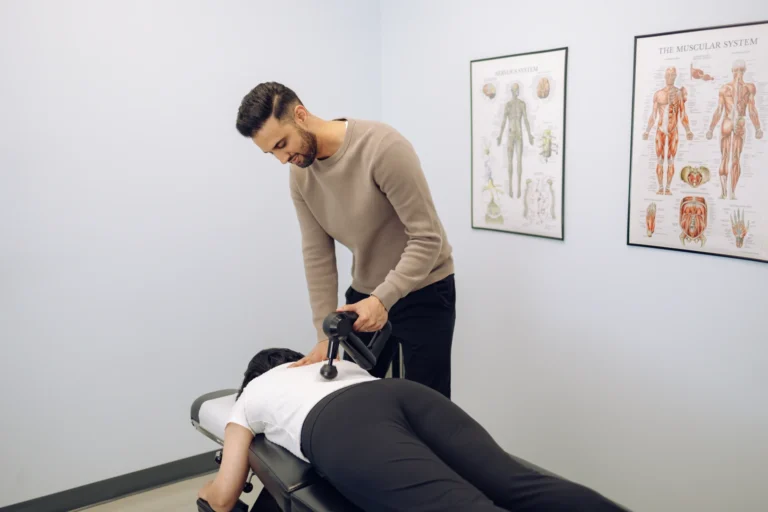
At Dr. Harman Braich, Chiropractor, operating out of Creekwood Physiotherapy, care is intentionally structured to combine hands-on chiropractic treatment with exercise-based rehabilitation. Research and clinical experience increasingly suggest that this integrated approach may be more effective for long-term outcomes than passive care alone.
This blog explains why combining chiropractic care and exercise matters, what the research suggests, and how this approach supports sustainable pain relief for active and everyday individuals alike.
Why Pain Often Returns When Only One Approach Is Used
Pain relief strategies often fall into two extremes:
Ready for Relief?
Book Your Appointment- Passive care only (adjustments, modalities, rest)
- Exercise only (strengthening without addressing mobility or pain drivers)
Each approach can help — but on its own, each has limitations.
Passive Care Alone
Manual therapies may reduce pain and improve mobility, but without reinforcing those gains, the body often returns to old movement patterns.
Exercise Alone
Exercise is essential, but pain, stiffness, or restricted joints may limit a patient’s ability to train effectively — leading to poor adherence or symptom flare-ups.
Research in rehabilitation science suggests that multimodal approaches combining manual therapy and exercise may lead to better long-term outcomes for musculoskeletal pain (Bishop et al., 2017; Bialosky et al., 2009).
Have Questions?
We're Here to Help!What Research Suggests About Combined Care
Modern pain and rehabilitation research increasingly supports an integrated model:
- Manual therapy may help reduce pain and improve short-term mobility (Bialosky et al., 2009).
- Exercise-based rehabilitation supports tissue capacity, movement control, and long-term adaptation (Hayden et al., 2005).
- Combining both may improve adherence, confidence in movement, and long-term functional outcomes (Bishop et al., 2017).
Importantly, pain is multifactorial. No single treatment works for everyone — but layered strategies often provide better resilience.
How Chiropractic Care and Exercise Work Together
1. Chiropractic Care May Reduce Barriers to Movement
Pain, stiffness, and restricted joints often prevent people from exercising comfortably.
Chiropractic adjustments may help restore joint motion and reduce mechanical irritation.
This may allow patients to:
- Move more freely
- Tolerate exercise better
- Build confidence in movement
2. Exercise Reinforces and Maintains Mobility Gains
Once movement improves, exercise helps maintain those changes.
Research suggests that strengthening and mobility exercises improve long-term outcomes in chronic musculoskeletal pain when compared to passive care alone (Hayden et al., 2005).
Exercise may:
- Improve joint control
- Increase tissue load tolerance
- Reduce recurrence of symptoms
- Improve confidence and self-efficacy
3. Addressing Both Symptoms and Capacity
Chiropractic care often focuses on symptom modulation, while exercise focuses on capacity building.
Together, they may:
Looking to Get Started?
Book Online Today!- Reduce pain sensitivity
- Improve movement quality
- Increase strength and endurance
- Support daily function and sport
This dual approach aligns with modern pain science, which emphasizes restoring function — not just eliminating symptoms.
Common Conditions That Benefit From Combined Care
At Dr. Harman Braich, Chiropractor, this approach is commonly used for:
- Chronic low back pain
- Neck pain and stiffness
- Shoulder pain and rotator cuff irritation
- Hip pain and movement restrictions
- Recurrent sports injuries
- Postural pain related to desk work
- Persistent muscle tension
In many of these cases, manual care alone may help temporarily — but long-term improvement often requires progressive loading and movement retraining.
How Exercise-Based Rehabilitation Fits In
Through exercise-based rehabilitation programs are designed to match each patient’s needs, stage of recovery, and goals.
These programs may include:
- Mobility and flexibility work
- Strength training
- Core stabilization
- Balance and coordination drills
- Gradual return-to-activity progressions
Research suggests individualized, progressive exercise is more effective than generic programs for long-term pain outcomes (Hayden et al., 2005).
Why Timing Matters: When to Adjust vs. When to Exercise
A key clinical skill is knowing when to emphasize hands-on care and when to push exercise progression.
- During acute flare-ups, chiropractic care may help reduce pain enough to allow movement.
- As pain settles, exercise becomes the primary driver of long-term improvement.
- Ongoing care shifts toward maintenance, resilience, and prevention.
This staged approach reduces setbacks and improves consistency.
Adjunct Therapies That May Support Combined Care
When appropriate, additional therapies may be used alongside chiropractic care and exercise:
- Shockwave Therapy for chronic tendon or soft-tissue pain
- Spinal Decompression Therapy for persistent lumbar symptoms
- Custom Foot Orthotics when lower-limb mechanics affect spinal load
- Dry Needling & Acupuncture for persistent muscle tension
These are used selectively — not as stand-alone solutions.
Start Your Journey!
Book With Us TodayWhy an Athletic Perspective Strengthens This Approach
As a former elite soccer player and captain of the University of Alberta Golden Bears,
Dr. Braich understands that pain-free movement isn’t just about treatment — it’s about capacity, control, and confidence.
Athletes don’t just get treated — they train their way back to performance. That same philosophy applies to everyday patients who want to lift, work, exercise, and live without pain.
Practical Tips to Support Long-Term Pain Relief
- View pain management as a process, not a quick fix
- Stay consistent with prescribed exercises
- Progress load gradually
- Avoid long periods of inactivity
- Use manual care strategically
- Address movement patterns early
- Seek care before pain becomes chronic
Localized Care for Southwest Edmonton Residents
At Dr. Harman Braich, Chiropractor, operating out of Creekwood Physiotherapy, we proudly serve:
- Creekwood Chappelle & Chappelle Gardens
- Ambleside, Keswick & Windermere
- Glenridding Heights & Glenridding Ravine
- Heritage Valley, Paisley, Desrochers & Jagare Ridge
- Rutherford, Callaghan, Allard, Cavanagh & Blackmud Creek
- Richford, Macewan & Blackburne
We provide comprehensive, evidence-informed care focused on long-term outcomes.
Your Path to Lasting Pain Relief
Long-term pain relief often requires more than one approach. Combining chiropractic care with exercise-based rehabilitation may help reduce pain, improve movement, and build resilience.
If you’re tired of short-term fixes, a combined care approach may be the next step.
Visit braichchiro.com to book an appointment with Dr. Harman Braich, Chiropractor.
Research & References
- Bialosky JE, Bishop MD, Price DD, Robinson ME, George SZ. The mechanisms of manual therapy in the treatment of musculoskeletal pain. Manual Therapy. 2009.
- Hayden JA, van Tulder MW, Malmivaara AV, Koes BW. Exercise therapy for treatment of non-specific low back pain. Cochrane Database of Systematic Reviews. 2005.
- Bishop MD, Torres-Cueco R, Gay CW, Lluch-Girbés E, Beneciuk JM, Bialosky JE. What effect can manual therapy have on a patient’s pain experience? Pain Management. 2017.