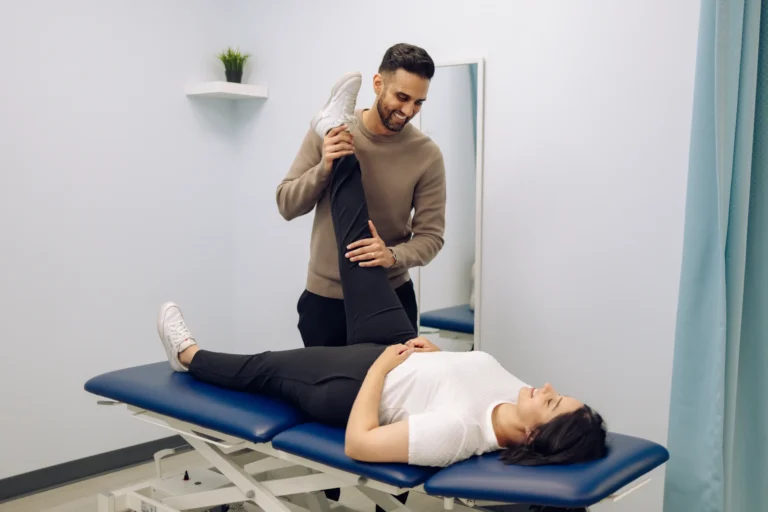
Why Hip Mobility Matters for Lower Back Health and Everyday Movement
Lower back pain is one of the most common reasons people seek care. But one of the most overlooked truths about low back pain is that the source of irritation isn’t always the low back itself.
At Dr. Harman Braich, Chiropractor, operating out of Creekwood Physiotherapy, we often find that restricted hip mobility and altered hip control may contribute to recurring lower back stiffness, flare-ups, or “tweaks” — especially in people who sit a lot, train regularly, or do repeated bending and lifting.
This blog explains why hip mobility matters, what research suggests about the hip–spine relationship, and how evidence-informed chiropractic care may help restore healthier movement patterns.
The Hip–Lower Back Connection: Why It Matters
Your hips are designed to be mobile, powerful joints that handle large forces during walking, lifting, squatting, running, and changing direction. Your lower back, on the other hand, is designed more for stability with controlled motion.
Ready for Relief?
Book Your AppointmentWhen the hips stop moving well (or stop controlling motion well), the lower back may compensate by moving more than it should. Over time, that compensation may increase mechanical stress on lumbar joints, discs, and surrounding muscles.
This “hip stiffness → back compensation” pattern is widely discussed in biomechanics and clinical movement literature (Neumann, 2010; Sahrmann, 2002).
How Restricted Hip Mobility May Contribute to Lower Back Pain
1) Increased Lumbar Compensation During Everyday Movement
When hip extension (leg moving behind you), hip rotation, or hip flexion is limited, your body still needs to achieve the task — so motion often shifts to the lumbar spine and pelvis.
Movement-system research suggests that certain subgroups of people with low back pain show predictable movement compensations, including excessive lumbar motion during tasks like bending, squatting, and transitional movements (Van Dillen et al., 2003; Van Dillen et al., 2008). While hip restriction isn’t the only driver, it can be one piece of the compensation puzzle.
What this may look like day to day:
Have Questions?
We're Here to Help!- Back stiffness after sitting
- “Pinching” during bending
- Feeling better after walking but worse after desk work
- Recurrent flare-ups after lifting or shovelling
2) Altered Pelvic Mechanics and Muscle Demand
Hip tightness can influence pelvic positioning and load distribution. When hips don’t contribute efficiently, the low back muscles often work harder to stabilize and move.
Research in athletic populations suggests hip strength and control may be associated with low back pain risk and persistence (Nadler et al., 2001). That doesn’t mean weak hips cause every case of back pain — but it supports the idea that hip function may matter for spinal load management.
3) Reduced Shock Absorption
The hip is a major “shock absorber” during gait and athletic movement. If hip mobility or control is limited, forces may be transferred upward into the lumbar spine.
Biomechanical models and clinical movement texts support this concept: if large proximal joints (hips) aren’t contributing, smaller segments (lumbar spine) may be forced to absorb more repetitive load (Neumann, 2010; Sahrmann, 2002).
4) Hip Rotation Restrictions and Repetitive Stress
In sports and rotational tasks, limited hip internal rotation has been discussed as a factor that may increase lumbar rotational demand. In some athletic contexts, this is commonly addressed as part of injury risk reduction and performance care (Nadler et al., 2001; Neumann, 2010).
Everyday Signs Your Hips May Be Affecting Your Lower Back
You may benefit from a hip mobility and movement assessment if you notice:
- Low back pain that worsens after prolonged sitting
- Pain when standing up from a chair or car
- Back tightness after walking uphill or stairs
- Discomfort with squats, lunges, or deadlifts
- Recurrent back “tweaks” with lifting
- One-sided hip tightness or uneven stride
- Pain that improves temporarily but keeps returning
These patterns often suggest movement dysfunction and load distribution issues — not necessarily a “damaged back.”
Looking to Get Started?
Book Online Today!What Research Suggests About Hips and Low Back Pain
Here’s the evidence-informed way to frame it:
- Research suggests low back pain is multifactorial (many contributing factors), and movement patterns are often part of the picture (Van Dillen et al., 2008).
- Research in sports medicine suggests hip strength and pelvic control may be associated with low back pain risk in some populations (Nadler et al., 2001).
- Biomechanics literature supports the idea that hip mobility and hip contribution influence spinal loading during functional movement (Neumann, 2010).
So while hip restriction isn’t the explanation for every case, it’s often a high-value, modifiable variable worth assessing — especially when back pain keeps recurring.
How Chiropractic Care May Help Address Hip-Related Back Pain
At Dr. Harman Braich, Chiropractor, we don’t just treat the painful spot — we assess the movement system: spine, pelvis, hips, and how they work together.
A hip-informed plan may include:
1) Joint Mobility Work for the Spine and Hips
Chiropractic adjustments may help restore motion in restricted spinal and extremity joints
Restoring joint motion may reduce compensation and improve movement options — which can matter for tasks like lifting, walking, and training (Neumann, 2010).
2) Soft-Tissue Therapy to Reduce Restriction Around the Hip
Hip flexors, glutes, adductors, and deep rotators commonly contribute to stiffness and altered mechanics. Soft-tissue care may help reduce muscle guarding and improve tolerance to movement — especially when combined with active rehab.
3) Movement Retraining and Load Management
Start Your Journey!
Book With Us TodayMovement-system approaches emphasize identifying how someone moves (not just where it hurts) and modifying patterns that repeatedly provoke symptoms (Van Dillen et al., 2008). In practice, that may mean improving:
- Hip hinge mechanics
- Pelvic control during squats/lunges
- Rotation control during walking and sport
- Core bracing strategies during lifting
4) Exercise-Based Rehabilitation for Long-Term Results
This is where long-term results are built. Through Rehabilitation & Exercise Therapy
patients may receive:
- Hip mobility drills (extension/rotation focused)
- Glute strengthening and endurance work
- Core stabilization progressions
- Single-leg control exercises
- Return-to-lift progressions (squat/hinge/lunge)
This aligns with modern rehabilitation thinking: passive care can help reduce symptoms, but active strategies often support lasting change (Sahrmann, 2002; Van Dillen et al., 2008).
5) Adjunct Therapies When Appropriate
Depending on the presentation, we may also consider:
- Spinal Decompression Therapy for persistent lumbar symptoms where decompression may support tolerance to movement
- Shockwave Therapy for stubborn tendon/soft tissue pain (when indicated)
- Custom Foot Orthotics when lower-limb mechanics may be contributing to hip load issues
- Dry Needling & Acupuncture for persistent muscular tension and trigger points
Why an Athletic Perspective Matters
Hip mobility and hip control are central to sport — sprinting, cutting, rotation, deceleration, and strength training all depend on it.
As a former elite soccer player and captain of the University of Alberta Golden Bears,
Dr. Braich brings a performance-based understanding of:
- Hip-driven mechanics
- Force transfer through the pelvis
- Rotation control and deceleration
- Return-to-sport planning
- Injury prevention principles
Even if you’re not an athlete, the same movement principles apply to everyday life.
Practical Ways to Support Hip Mobility at Home
Here are simple, safe starting points:
- Stand and move every 30–45 minutes if you sit often
- Prioritize a daily hip mobility routine (5–8 minutes)
- Strengthen glutes and core 2–3x/week
- Warm up before lifting or running
- Reduce sharp pain triggers and progress gradually
- Walk daily (even short walks help hip extension exposure)
These strategies typically work best when guided by an individualized assessment.
Localized Care for Southwest Edmonton Residents
At Dr. Harman Braich, Chiropractor, operating out of Creekwood Physiotherapy, we proudly serve:
- Creekwood Chappelle & Chappelle Gardens
- Ambleside, Keswick & Windermere
- Glenridding Heights & Glenridding Ravine
- Heritage Valley, Paisley, Desrochers & Jagare Ridge
- Rutherford, Callaghan, Allard, Cavanagh & Blackmud Creek
- Richford, Macewan & Blackburne
We provide comprehensive, evidence-informed care for low back pain and movement dysfunction.
Your Path to a Healthier Lower Back
Lower back pain isn’t always about the back itself. For many people, improving hip mobility and hip control may be the missing piece that reduces flare-ups and improves long-term function.
If your back pain keeps returning, a full movement-based assessment may help identify why.
Visit braichchiro.com to book an appointment with Dr. Harman Braich, Chiropractor.
Research & References
- Nadler SF, Malanga GA, DePrince M, Stitik TP, Feinberg JH. Hip muscle imbalance and low back pain in athletes: influence of core strengthening. Archives of Physical Medicine and Rehabilitation. 2001.
- Van Dillen LR, Sahrmann SA, Norton BJ, Caldwell CA, Fleming DA, McDonnell MK, Bloom NJ. Movement system impairment-based categories for low back pain. Journal of Orthopaedic & Sports Physical Therapy. 2003.
- Van Dillen LR, et al. Trunk movement patterns and low back pain: a movement-system approach. Journal of Orthopaedic & Sports Physical Therapy. 2008.
- Neumann DA. Kinesiology of the Musculoskeletal System: Foundations for Physical Rehabilitation. 2nd ed. 2010.
- Sahrmann SA. Diagnosis and Treatment of Movement Impairment Syndromes. 2002.